
WELCOME BONUS 300%
UP TO €2000 + 100
FREE SPINS
UP TO €2000 + 100
FREE SPINS
Home → Blackjack
Blackjack at Rolling Slots: Variants, Rules and Payouts
What Peek Means with a Dealer Ace
When a dealer's upcard is an Ace, the casino's policy on checking for a Blackjack, known as 'the peek', directly impacts player strategy. While specific peek rules for individual live tables at Rolling Slots are not detailed, the general principle is that a dealer peek allows players to know immediately if the dealer has Blackjack. This prevents players from doubling down or splitting hands, only to lose their bets to a dealer Blackjack.
The absence of a peek, particularly in older or less regulated games, means a player might commit more funds to a hand before discovering the dealer's Blackjack. This is often associated with 'Late Surrender' rules, where a player can forfeit half their bet after the dealer checks for Blackjack. Blackjack Surrender, as a rule modifier, can improve the Return to Player (RTP) by approximately 0.08 percent points, but its value is significantly less than Early Surrender.
Understanding the dealer's peek procedure is crucial for optimal play, even if the exact implementation varies across different live environments. For players at Rolling Slots, knowing that a peek is in effect provides a degree of protection against losing a full bet when the dealer holds a Blackjack, allowing for more informed decisions on their own hands.
Step-by-step Split at the Live Table
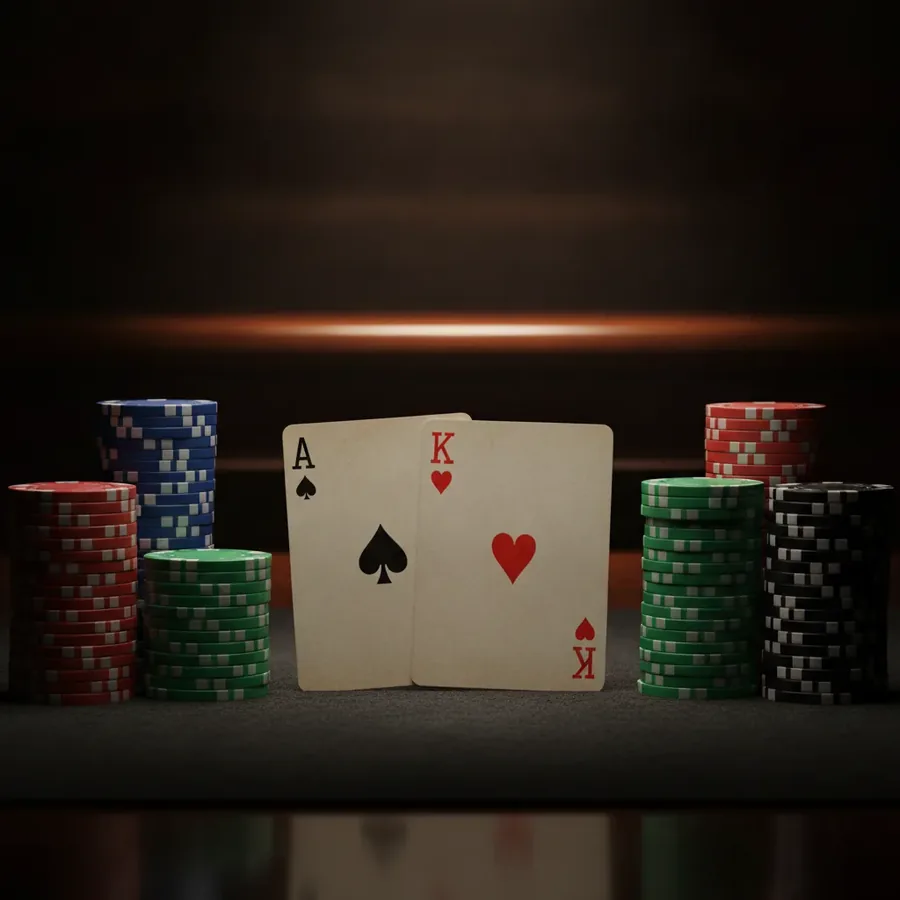
At a live dealer table offering Blackjack Split, the process begins when a player receives two cards of the same rank. The player then has the option to 'split' these cards into two separate hands, placing an additional bet equal to their original wager on the second hand. This action effectively turns the single hand into two distinct hands, each playing independently.
Following the split, each of the new hands receives one additional card. From this point, standard Blackjack rules apply to each hand individually, allowing for further actions such as hitting, standing, or even doubling down. For instance, if a player splits Aces, they might be restricted to receiving only one card per Ace, a common rule variation.
The decision to split can significantly alter the game's dynamics and potential outcomes. Rules like 'Double After Split' (DAS) can further enhance player advantage, reducing the house edge by approximately 0.14 percent points. Players should always consult the specific table rules displayed to understand all available actions and their impact on gameplay.
Perfect Pairs vs 21+3 in House Edge
Side bets like 'Perfect Pairs' and '21+3' offer additional ways to win in Blackjack, but they come with their own house edges. Perfect Pairs pays out based on the strength of the initial two cards forming a pair, with a 'perfect pair' (two identical cards of the same suit) offering the highest payout. This bet's RTP is generally lower than the main Blackjack game.
The '21+3' side bet combines the player's first two cards with the dealer's upcard to form a three-card poker hand. Payouts vary based on the poker hand formed, such as a straight flush or three of a kind. While these side bets add excitement, their house edge is typically considerably higher than the main Blackjack game, often exceeding 5%.
For example, while some Blackjack variants offer a house edge as low as 0.15% with optimal strategy, side bets like these can significantly increase the overall house advantage. Players should be aware that engaging in these side bets reduces the overall RTP and is generally not recommended for players focused solely on minimizing the house edge.
Unlimited seats via a split dealer hand
Certain live Blackjack variants, such as Infinite Blackjack by Evolution, offer an unlimited number of seats at the table. This is achieved by dealing each player the same two initial cards, regardless of how many players are actively participating. This innovative approach ensures that no player is ever left waiting for a seat, a common issue at busy live tables.
While the concept of unlimited seats is facilitated by how the cards are dealt to each player individually, the 'split dealer hand' is a separate mechanic. When a dealer's hand is split, it refers to the player's action of dividing their own cards into two separate hands. This is a player decision, not a feature enabling unlimited seats.
Games like Infinite Blackjack and Lightning Blackjack, available at Rolling Slots, host an unlimited number of players by dealing identical initial hands to everyone. This allows for continuous play, with players making decisions on their own hand without affecting the other participants' core gameplay, thus bypassing the traditional seat limitations.
Why Loss Progression Quickly Reaches Table Limit
Employing a loss progression strategy, such as the Martingale system where bets are doubled after each loss, can rapidly escalate towards the table limit. If a player starts with a minimum bet of €1 and experiences a series of losses, their subsequent bets could quickly become very large. For instance, six consecutive losses would require a bet of €64 (€1 + €2 + €4 + €8 + €16 + €32).
The table limits at Rolling Slots vary, but even at a relatively high limit like €5,000, a sustained losing streak can be problematic. If a player were to continue a doubling progression, they would reach the €5,000 limit by the 12th consecutive loss (after betting €2,048 on the 11th loss). This rapid increase demonstrates the inherent risk of such strategies.
Therefore, loss progression systems are generally discouraged for players at Rolling Slots, especially when aiming to manage their bankroll effectively. The potential for a losing streak to quickly exceed the table's maximum bet makes these strategies financially precarious and prone to significant losses within a short period.
Blackjack variants at a glance
| Variant | Payout | House edge | Rule | Bet range |
|---|---|---|---|---|
| Blackjack Liberal Vegas Strip (liberale Regeln, 3:2) | 99.72% | 0.28% | Günstigste Regelkombination: S17 + DAS + Resplit + Late Surrender. Standardabweichung 1,15 | Blackjack 3:2, Gewinn 1:1 |
| Blackjack Split / Double / H17 – Regel-Effekte | n.a. (Regel-Modifikatoren) | H17 +0.22 Prozentpunkte; RSA −0.08 Prozentpunkte; DAS −0.14 Prozentpunkte | Dealer Hits Soft 17 verschlechtert RTP um 0.22 Prozentpunkte; Resplit Aces verbessert um 0.08 Prozentpunkte; Double After Split verbessert um ca. 0.14 Prozentpunkte; 6 Decks statt 8 – ca. 0.02 Prozentpunkte. | Double – Einsatz ×2 mit einer Karte; Split – bis 4 Hände; Ass-Split meist mit einer Karte. |
| Blackjack 6 Decks, S17, DAS, DOA, Auszahlung 3:2, Basisstrategie | 99.54% | 0.46% | Dealer steht auf Soft 17; Verdopplung auf jeder Zweierkarte; Verdopplung nach Split erlaubt; keine Aufgabe. Basisstrategie ist für diesen Wert zwingend | Blackjack 3:2, normaler Gewinn 1:1, Insurance 2:1 |
| Blackjack Insurance / Versicherung (6–8 Decks) | 92.53% | 7.47% | Separate Nebenwette bis 50% der Hauptwette, wenn der Dealer ein Ass hat. Basisstrategie schreibt IMMER Ablehnung vor (außer Karten zählen bei True Count ≥ +3). Bei einem Deck Vorteil ≈ 5.88% | Insurance 2:1 |
| Blackjack Surrender (Late Surrender) – Regel-Effekt | n.a. (Regel-Modifikator) | −0.08 Prozentpunkte | Spieler gibt Hand nach Dealer-Blackjack-Prüfung auf, verliert die Hälfte des Einsatzes. Verbessert RTP um ca. 0.08 Prozentpunkte. Early Surrender ist wesentlich wertvoller (bis −0.6 Prozentpunkte), aber extrem selten. | Rückzahlung 50% des Einsatzes |
| Blackjack Auszahlung 6:5 statt 3:2 (6 Decks) | 98.15% | 1.85% | Ersatz von 3:2 durch 6:5 fügt exakt +1.39 Prozentpunkte zum Vorteil des Casinos hinzu – stärker als jede andere Regeländerung. Bei $10 Einsatz zahlt Blackjack $12 statt $15. | Blackjack 6:5, Gewinn 1:1 |
Double Down after Split: which tables allow it
The Blackjack 6 Decks, S17, DAS, DOA, Auszahlung 3:2, Basisstrategie game permits Double After Split (DAS). This rule allows a player to double their bet after splitting a pair. The RTP for this specific configuration, when played with optimal strategy, is 99.54%.
This allowance of DAS can significantly improve player advantage, reducing the house edge by approximately 0.14 percentage points compared to tables without it. For a player focusing on optimal play, this feature on tables like Blackjack 6 Decks, S17, DAS, DOA, Auszahlung 3:2, Basisstrategie enhances return potential.
Understanding which tables permit Double After Split is crucial for players employing advanced strategies. By selecting tables like Blackjack 6 Decks, S17, DAS, DOA, Auszahlung 3:2, Basisstrategie that offer DAS, players can make more informed decisions and potentially improve their long-term results.
How long does a Live Blackjack round take?
Live Blackjack rounds, such as those found on Quantum Blackjack Plus Live by Playtech, are designed for dynamic gameplay. While specific round times can vary based on player actions and decisions, the betting window for each hand is typically brief to maintain momentum. The betting limit for Quantum Blackjack Plus Live ranges from 1 to 5,000 EUR.
The pace of Infinite Blackjack by Evolution is also optimized for continuous play, accommodating an unlimited number of players. This ensures that decisions are made efficiently without long delays, keeping the game flowing smoothly. The RTP for Infinite Blackjack is 99.47% when played optimally.
Lightning Blackjack by Evolution also features a rapid round structure, enhanced by Lightning multipliers up to 25x on winning hands. This variant aims to provide quick, impactful rounds, making it suitable for players seeking faster-paced live casino action. The betting limit for Lightning Blackjack is 1 to 2,500 EUR.
Clicked Too Late: Hand Is Automatically Held
In live dealer blackjack environments like those offered by Evolution Gaming, there is a strict time limit for placing bets and making decisions. If a player fails to act within this allotted time, their hand will be automatically held. This is a standard procedure across most live blackjack tables to ensure the game progresses smoothly for all participants.
For instance, on Infinite Blackjack, which offers unlimited seats, timely decisions are paramount. The absence of a player's action within the designated window results in their current hand being played out according to the standard rules of blackjack. The RTP for Infinite Blackjack is 99.47%.
This automatic holding of a hand prevents delays and ensures the game moves forward without interruption. Players must be mindful of the betting timer on tables like Lightning Blackjack, which has a 1 to 2,500 EUR betting limit, to avoid having their turn pass by.
What doesn't count as Blackjack after Split?
When a player splits a pair in blackjack, the resulting hands are treated as new, distinct hands. A blackjack achieved on a split hand, such as on tables offering Double After Split (DAS), typically does not count as a natural blackjack. This means it may not pay out at the standard 3:2 odds, depending on the specific table rules.
For example, if a player splits two Aces and draws a 10-value card on one of the Aces, this combination is usually considered a score of 21, not a natural blackjack. The Blackjack 6 Decks, S17, DAS, DOA, Auszahlung 3:2, Basisstrategie game, with its 99.54% RTP, adheres to these common blackjack rules.
It is important for players to understand that a score of 21 after a split is treated differently than a natural blackjack achieved on the initial two cards. This distinction can impact the payout, as a non-natural 21 after a split is typically paid at even money (1:1), unlike the 3:2 payout for a natural blackjack.
Early Surrender is removed from many tables
Early Surrender, a player-favorable option where a player can forfeit half their bet before the dealer checks for blackjack, is notably absent from many modern online blackjack tables. This rule significantly reduces the house edge, potentially by up to 0.6 percentage points. Its removal shifts the advantage back towards the casino.
While Late Surrender, where a player can surrender after the dealer checks for blackjack, is present on some tables like Blackjack Surrender (Late Surrender), it offers a much smaller benefit to the player, improving RTP by only about 0.08 percentage points. The payout for late surrender is 50% of the bet.
The absence of Early Surrender means players must engage with more standard blackjack variants, such as Blackjack Ein Deck, klassische Regeln, 3:2 with an RTP of 99.85%, or Blackjack 6 Decks, S17, DAS, DOA, Auszahlung 3:2, Basisstrategie with an RTP of 99.54%. This makes strategic decisions regarding hitting, standing, doubling, and splitting even more critical.
Error insurance: 7 percent additional house edge
The Blackjack Insurance side bet, available with 6-8 decks, presents a significant house edge of 7.47%. This wager is offered when the dealer shows an Ace, allowing a bet up to 50% of the main wager.
According to basic strategy, this insurance bet should always be declined, as its RTP is only 92.53%. Card counters might consider it at a True Count of +3 or higher, where the advantage shifts.
For players not employing advanced card counting techniques, accepting this insurance bet leads to a substantial long-term increase in the casino's advantage, costing them more over time compared to avoiding it.
Splitting costs double bet: plan budget
When playing Blackjack 6 Decks, the option to split hands is permitted, but it essentially doubles the initial bet for that specific hand. This rule, Double After Split (DAS), allows players to split pairs and then double down on the resulting hands.
This functionality means a player might face double the outlay on a single turn if they choose to split and then double. The ability to Double After Split (DAS) is a player-favorable rule, reducing the house edge by approximately 0.14%.
Therefore, players should factor in the potential for their bets to double mid-hand when budgeting for this specific Blackjack variant, especially if they intend to utilize splitting strategies.
Bonus 100 EUR with 10 percent credit
The welcome bonus at Rolling Slots offers 300% up to €2,000 plus 100 free spins. However, table games, including Blackjack, contribute only 10% towards the bonus wagering requirements.
This means a €100 bonus amount received would require €1,000 in bets from table games to meet the wagering. For a player depositing €100 to claim a €300 bonus, they would need to wager €4,000 in total if playing slots (100% contribution).
If a player focuses solely on table games for wagering, this 10% contribution means a significantly higher amount of play is required to clear the bonus, making it less efficient for table game enthusiasts.
Stand-on-17 Rule and Its Meaning for Players
In Blackjack 6 Decks, the dealer stands on all hands totaling 17, including soft totals (hands with an Ace counted as 11). This specific rule, 'S17', is a standard element of many Blackjack games.
The dealer standing on Soft 17 (S17) increases the house edge by approximately 0.22% compared to variants where the dealer hits on Soft 17. This means the dealer is less likely to bust on a soft 17 total.
For players, this rule means the dealer's hand is more likely to reach a stronger total before play concludes, slightly increasing the casino's average retention from player wagers on this specific game variant.
Which hands are excluded from Surrender?
The provided data mentions 'Late Surrender' as a rule in Blackjack, where a player can give up half their bet after the dealer checks for Blackjack. This rule is presented as a modifier that can reduce the house edge by approximately 0.08%.
Players should consult the specific rules displayed at each live Blackjack table to understand the precise conditions and hand combinations for which the Surrender option is available before opting to use it.
Contact
Live - online chat
Banking









Providers












Rolling Slots 2026